Welcome to shopicat Mall!
Welcome to shopicat Mall!
Cart
CloseYour shopping cart doesn't have any products yet!!
Pegging refers to a sexual practice where a female partner (or the non-penetrating partner) wears a strap-on dildo to provide penetrative pleasure for their male partner (or the receiving partner), typically involving anal penetration. In recent years, this topic has been increasingly discussed openly by couples, with many people curious about what makes it so enjoyable and how to start trying it safely. This article walks you through the principles, preparation, steps, and frequently asked questions to give you a systematic introduction to pegging.
The Unique Pleasure of the Prostate
For those who have a prostate, it is a highly sensitive erogenous zone located along the front wall of the rectum, which can be stimulated directly or indirectly through anal penetration. Prostate orgasms feel distinctly different from regular ejaculatory orgasms — many describe them as more intense, longer-lasting, and more likely to spread into full-body sensations. This is why many male partners feel like they've discovered a whole new world after trying pegging.
The Psychological Thrill of Role Reversal
Pegging flips the traditional "penetrator/penetrated" roles, and this reversal itself is a fresh and exciting experience for many couples. The exchange of control and surrender brings completely different psychological sensations than usual, and opens up new ways for both partners to explore each other's bodies and their relationship dynamic.
Building Trust and Intimacy Between Partners
Because pegging requires open communication, patience, and trust, many couples report that after trying it, they communicate more honestly and feel a deeper sense of intimacy. Being willing to cooperate and attend to each other's needs throughout the process is itself a powerful expression of trust in the relationship.
Mindset and Communication
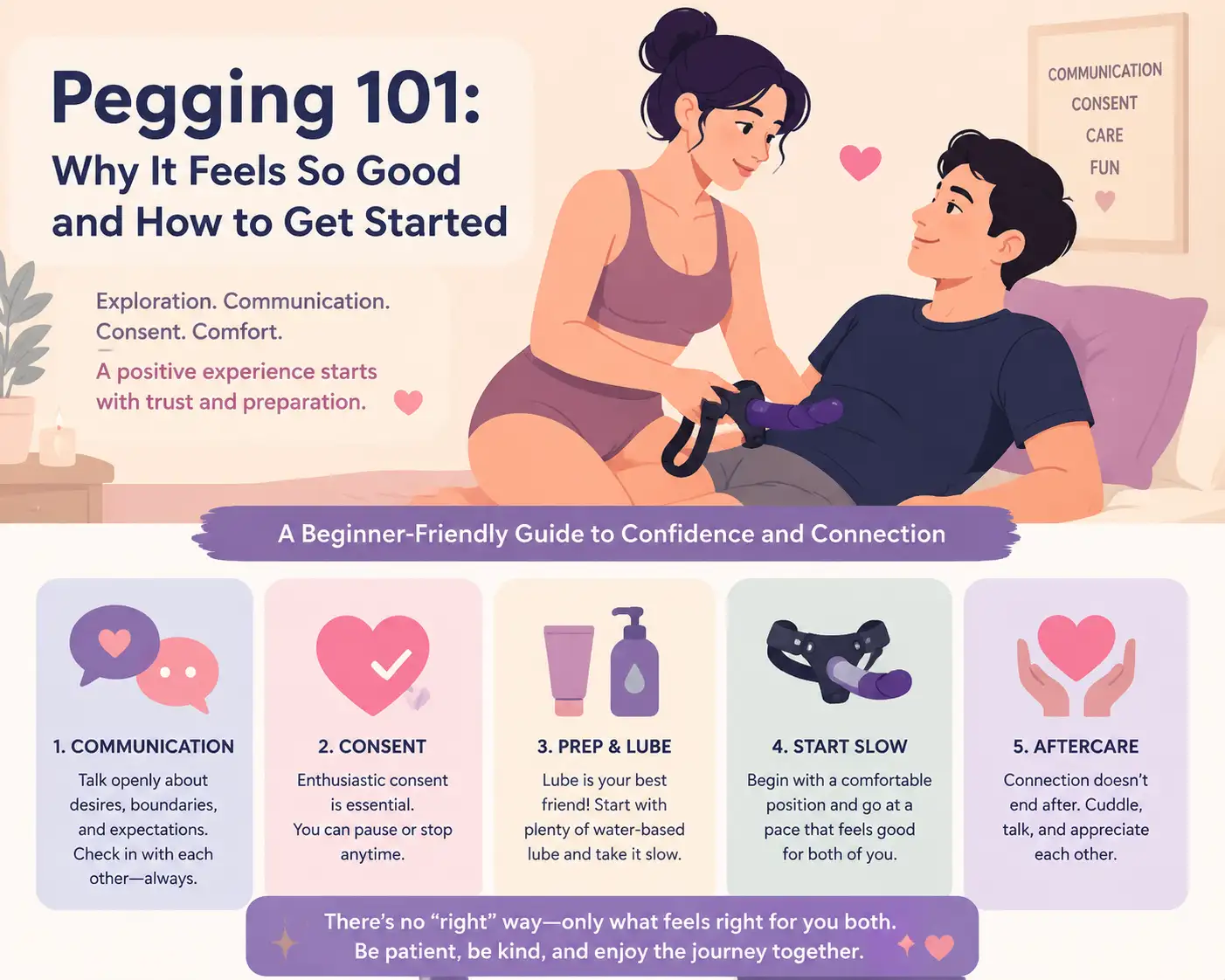
Before trying it, both partners need to have an honest conversation about expectations, curiosities, and any concerns. This is not a task that "must be done right" — it's a shared exploration. It's okay to feel nervous, to pause in the middle, or to not succeed on the first try. It's a good idea to agree on a safe word in advance — something that wouldn't naturally come up in conversation — which signals an immediate stop. Alternatively, you can use the "traffic light" system (red = stop, yellow = slow down/check in, green = keep going) to communicate and adjust the pace at any time.
Gear and Equipment
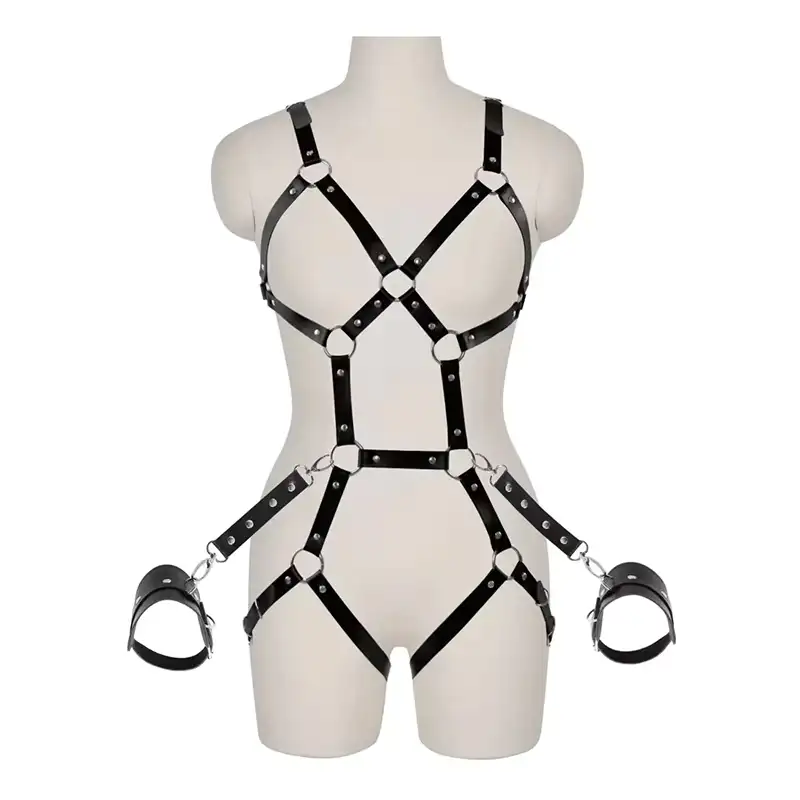
The essential equipment includes: a well-fitting harness, a beginner-friendly dildo, plenty of water-based lubricant, and condoms (to put over the dildo for easier cleanup). For beginners, it's recommended to choose a dildo that is slimmer, shorter, and has a rounded, gradually tapered shape. For material, prioritize medical-grade silicone — it's non-porous, easy to clean, and skin-friendly.
Cleanliness and Hygiene
Before anal penetration, it's helpful to have a bowel movement in advance. If you're concerned about cleanliness, you can also gently rinse the anal area with warm water before penetration. There's no need for excessive cleaning or enemas — the body has its own natural cleaning mechanisms, and over-cleaning can actually irritate the intestinal lining.
Step 1: Relaxation and Foreplay
The muscles around the anus naturally contract when you're tense. Relaxation is key to a smooth experience. Take plenty of time for regular intimate foreplay to help the receiving partner feel physically and mentally at ease before moving on to penetration.
Step 2: Start with Fingers First
Before using the dildo, start with fingers (with plenty of lube) to help the receiving partner gradually get used to the sensation of stretching. Begin with one finger, pay attention to your partner's reactions, and decide together whether to continue. This step significantly reduces discomfort when transitioning to the dildo.
Step 3: Use Plenty of Lube
The anus does not self-lubricate the way the vagina does, so you'll need much more lube than you might expect — and you'll need to reapply throughout, not wait until things feel dry. For silicone dildos, use water-based lube and avoid silicone-based lube, as it can damage the material.
Step 4: Put on the Harness and Enter Slowly
After the wearer adjusts the harness for a snug fit and sets the dildo angle, start with shallow penetration at a very slow pace. Watch your partner's facial expressions and body language, and only go deeper or faster once they confirm they're comfortable. Don't rush for speed or depth right away.
Step 5: Find Your Rhythm and Keep Communicating
Throughout the process, keep checking in with your partner using words or pre-agreed signals. If they express discomfort or use the safe word, stop immediately and adjust or pause. The prostate is typically located along the front wall of the rectum (toward the belly button). Try adjusting the angle slightly to find the position that feels best for your partner.
Will it hurt the first time? If preparation is thorough (relaxation, finger stretching, plenty of lube, slow entry), most people don't experience severe pain on their first try — though you may feel some mild pressure or unfamiliar sensations. If there's noticeable pain, stop immediately and check whether you need more relaxation or lubrication.
How long does it take to find the prostate and feel pleasure? Everyone's body responds differently. Some people feel intense pleasure on their very first try, while others may need several sessions to get familiar with the sensations and find the most comfortable angles and rhythm. Don't stress or compare yourself to others.
What size should a beginner choose? Start with a slimmer, shorter dildo and work your way up as you gain experience and comfort. There's no need to go for a larger size right away.
Is a condom absolutely necessary? Highly recommended. Covering the dildo with a condom makes cleanup much easier, reduces the risk of bacterial residue, and lowers the chance of cross-contamination — especially when sharing toys or switching between different body parts.
What if something feels uncomfortable during the session? Use the pre-agreed safe word or signal to pause immediately. Don't feel pressured to keep going just because you've already started. Your body's signals of discomfort are always more important than "finishing the act."
Can only male partners be pegged? Not at all. Anyone with a prostate — or anyone open to trying anal penetration — can enjoy pegging. This practice is not limited to any specific gender or sexual orientation.
Final Thoughts
What makes pegging feel so amazing for so many people is the combination of the prostate's unique pleasure potential, the psychological excitement of role reversal, and the deep trust that comes from exploring something new together. For beginners, patient communication, thorough preparation, and a gradual pace are the keys to a safe and enjoyable experience. Don't put too much pressure on yourself — think of it as a journey of discovering each other's bodies and deepening intimacy together.

 English
 简体中文
简体中文 繁体中文
繁体中文